
Skin Concerns -
Acne
Acne is one of the most common skin conditions and can appear at any age. It develops when pores become blocked with excess oil, dead skin cells, or bacteria, which leads to breakouts, inflammation, and in some cases, long-term scarring. Beyond the physical symptoms, acne can have a significant impact on self-confidence and overall wellbeing.
Even once active acne has cleared, it can leave behind acne scarring, which affects both the texture and appearance of the skin. Scarring occurs when the skin’s healing process is disrupted after deep or inflamed breakouts, leaving behind indentations, raised areas, or uneven texture. Many clients also experience post-inflammatory hyperpigmentation — red or brown marks that remain on the skin even after spots have healed. Treatments for acne scarring focus on resurfacing and repairing the skin, stimulating new collagen, and improving overall tone and texture.
What is Active Acne?

Active acne refers to acne that is currently inflamed and visible on the skin. This can range from mild congestion to more severe, painful breakouts, and if not managed properly, it can lead to long-term scarring. In other words, it is acne in its breakout stage, rather than the scars or pigmentation left behind once spots have healed.
There are several types of active acne:
-
Blackheads (open comedones): Small dark plugs that form when oil and dead skin block the pores and remain open on the surface.
-
Whiteheads (closed comedones): Small, firm white or flesh-coloured bumps that form when pores are blocked but remain closed.
-
Papules: Red, inflamed spots that may feel sore but do not contain pus.
-
Pustules: Inflamed spots filled with pus, often with a yellow or white centre.
-
Nodules: Large, painful lumps that form deep within the skin.
-
Cysts: Severe, pus-filled breakouts that are often very painful and most likely to cause scarring if untreated.
Treatments for active acne focus on calming inflammation, reducing bacteria, unblocking pores, and preventing new breakouts, while also supporting the skin’s natural healing process to minimise the risk of long-term damage.
Whilst diet and lifestyle often have the biggest impact on curing acne, we offer a range of evidence-based in-clinic treatments that can help support and speed up the process along the way.
Active Acne Treatment Options:
For active acne, the priority is to reduce bacteria, inflammation, excess oil and blocked pores. The main options are:
-
Chemical Peels: Professional resurfacing treatments that exfoliate dead skin cells, unclog pores and help reduce excess oil, congestion and breakouts.
-
PRX-T33 No-Peel Peel: An advanced biorevitalisation treatment designed to improve skin quality, texture and tone without needles or visible peeling.
-
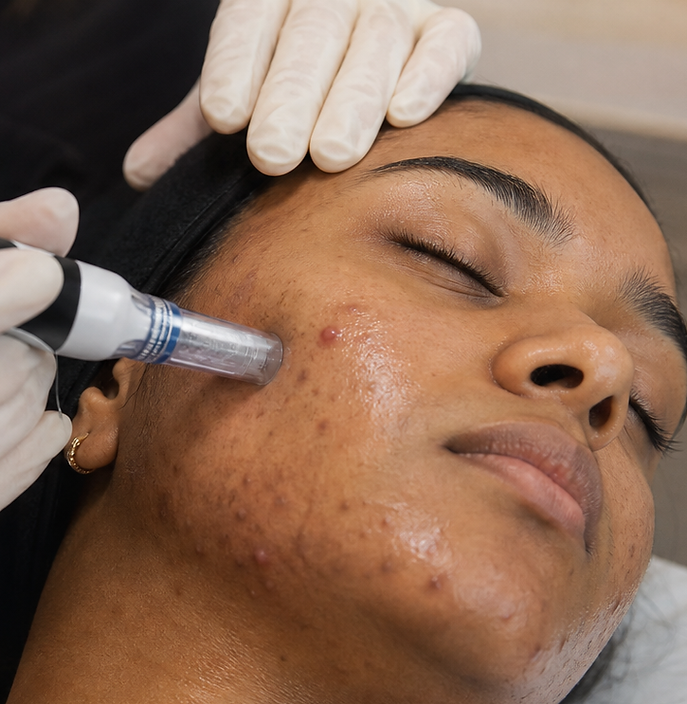
SkinPen Medical Microneedling: Creates controlled microchannels that stimulate the skin’s natural renewal process. Emerging clinical research suggests microneedling may also benefit selected cases of active acne, as well as improving post-acne texture and scarring.
-
Carbon Laser Peel: Combines activated carbon with laser technology to deeply cleanse pores, remove impurities and dead skin cells, control excess oil and target acne-causing bacteria.
-
IPL Acne Clearance: Uses controlled pulses of light to target acne-causing bacteria and reduce activity within overactive sebaceous glands, helping to calm existing breakouts and reduce future flare-ups.
-
Dermalux LED Phototherapy: A gentle, non-invasive treatment using targeted wavelengths of light to help reduce acne-causing bacteria, calm inflammation and support the skin’s natural healing process. It can be used alone or alongside other acne treatments.
Every acne journey is different, so treatment suitability will be determined during consultation. A patch test or preparatory skincare may be required.
What is Acne Scarring?
Acne scarring refers to the marks and changes in skin texture left behind once active acne has healed. These scars form when deep or inflamed breakouts damage the skin and disrupt the healing process, leading to indentations, raised areas, or uneven pigmentation. Unlike active acne, scarring remains on the skin long after breakouts have cleared and often requires targeted treatments to improve.
There are several types of acne scarring:
-
Ice Pick Scars: Deep, narrow scars that extend into the dermis, giving the skin a pitted appearance.
-
Boxcar Scars: Broad depressions with defined edges, often seen on the cheeks and temples.
-
Rolling Scars: Wide, shallow indentations with soft edges that give the skin a wavy or uneven texture.
-
Hypertrophic/Keloid Scars: Raised, firm scars caused by excess collagen production during healing.
-
Post-Inflammatory Hyperpigmentation (PIH): Flat red, brown, or dark marks left after spots heal — not true scarring but often treated in the same way.
Treatments for acne scarring focus on resurfacing and repairing the skin, stimulating new collagen, and improving overall tone and texture to soften scars and restore smoother skin.
Whilst no single treatment can erase scarring completely, we offer a range of evidence-based in-clinic options that can significantly improve its appearance and support long-term skin health.

Acne Scarring Treatment Options:
.png)
Some treatments used to manage active acne can also improve acne scarring. However, once breakouts are under control, the treatment focus changes to stimulating collagen, resurfacing uneven skin and reducing residual redness or pigmentation. Treatment strength, settings and combinations are therefore tailored specifically to the type and depth of scarring:
-
SkinPen Medical Microneedling: Stimulates the skin’s natural healing response and encourages new collagen and elastin, helping to soften indented scars, refine pores and improve uneven texture. Best for: rolling scars, shallow boxcar scars and enlarged pores.
-
SkinPen with PRX-T33: These treatments can be incorporated into a carefully planned programme for enhanced skin renewal and collagen stimulation, targeting depressed scars, uneven texture and overall skin quality. Best for: rolling scars, shallow boxcar scars and post-inflammatory pigmentation (PIH).
-
PRX-T33 No-Peel Peel: A needle-free biorevitalisation treatment that helps improve skin texture, tone and the appearance of depressed scars without visible peeling. Best for: mild atrophic or depressed scars and post-inflammatory pigmentation (PIH).
-
Chemical Peels: Professional resurfacing treatments that encourage cell renewal and help improve superficial scarring, uneven texture and post-inflammatory pigmentation. Best for: superficial scarring and flat red or brown post-acne marks.
-
Dermal Filler for Acne Scarring: Carefully placed dermal filler can lift selected indented or depressed acne scars by restoring volume beneath the skin. This can create an immediate improvement in surface texture while supporting a smoother, more even appearance. Best for: individual rolling scars and selected broad, depressed atrophic scars.
-
Fractional Laser Resurfacing: An advanced option for deeper or more established scars. Controlled laser energy stimulates collagen remodelling to reduce the appearance of pitted scarring and create a smoother complexion. Best for: deeper boxcar scars, rolling scars and selected ice-pick scars.
-
IPL or Pulsed Dye Laser: Best suited to the redness and discolouration left behind after acne rather than indented scars, helping the complexion appear calmer and more even. Best for: post-inflammatory erythema, persistent redness and red or purple post-acne marks.
-
Carbon Laser Peel: Particularly helpful when mild scarring or post-acne marks are accompanied by enlarged pores, oiliness or ongoing congestion. Best for: very mild superficial scarring, enlarged pores and post-acne pigmentation on oily or congested skin.
-
Collagen-Stimulating Skin Boosters: Injectable treatments that support hydration, collagen production and overall skin quality. They can complement resurfacing treatments where the skin needs additional regenerative support, although they are not intended to replace targeted treatment for deeper pitted scars. Best for: mild atrophic scarring and weakened skin requiring additional support alongside targeted scar treatment.
A consultation allows us to identify whether the main concern is active acne, scarring, pigmentation or a combination of these, before creating a personalised treatment plan.