
Skin Concerns -
Pigment and Melasma
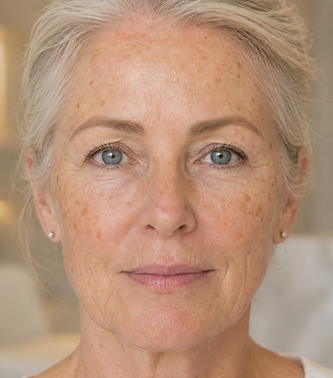
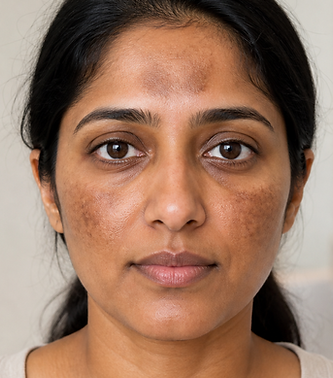
Pigmentation concerns are common and can take many different forms, from age spots and sun damage to more complex conditions such as melasma. While these marks are not harmful, they can affect confidence and make skin appear uneven or aged. Understanding the difference between pigmentation types is important, as each requires a tailored treatment approach.
< Sun damage and age-related pigmentation (also called solar lentigines or age spots) are caused by prolonged UV exposure. These are typically well-defined, darker patches that develop gradually over time, most often on the face, chest, and hands. They respond well to treatments such as laser, IPL, and chemical peels.
Melasma, on the other hand, is a chronic pigmentation condition triggered by hormonal changes, genetics, or sun exposure. It usually appears as larger, symmetrical patches of brown or grey discolouration, most commonly on the cheeks, forehead, and upper lip. Unlike sun damage, melasma can be more stubborn and prone to recurrence, so management requires a careful, long-term approach >

Pigment Management Treatment Options:
Pigmentation can appear as freckles, sun spots, age spots or post-inflammatory marks left behind by acne or skin irritation. Treatment focuses on breaking down excess pigment, encouraging cell renewal and restoring a clearer, more even-looking complexion.
-
PRX-T33 No-Peel Peel: A needle-free biorevitalisation treatment that supports skin renewal and helps improve uneven tone without visible peeling. Best for: post-inflammatory pigmentation, dullness and mild, widespread discolouration.
-
Carbon Laser Peel: Deeply cleanses and gently resurfaces the skin, helping to remove dull surface cells and improve overall clarity. Best for: mild superficial pigmentation accompanied by oiliness, congestion or enlarged pores.
-
Chemical Peels: Professional resurfacing treatments that exfoliate pigmented surface cells, stimulate renewal and gradually brighten uneven skin. The peel type and strength are selected according to the client’s skin and pigmentation. Best for: post-inflammatory hyperpigmentation, post-acne marks, superficial sun damage and uneven tone.
-
SkinPen Medical Microneedling: Creates controlled microchannels that stimulate skin renewal and collagen production, helping to improve texture and create a more even-looking complexion. Best for: post-inflammatory pigmentation accompanied by acne scarring, enlarged pores or uneven texture.
-
IPL Targeted Pigment Treatment: Uses controlled pulses of light that are absorbed by excess melanin, breaking down unwanted pigment so it can rise to the surface and naturally shed. Best for: individual sun spots, age spots, freckles and well-defined areas of UV-related pigmentation.
-
Full-Face IPL Skin Rejuvenation: Treats more widespread pigmentation while improving overall clarity, brightness and uneven skin tone. Best for: general sun damage, scattered freckles, multiple age spots and mottled pigmentation across the face.
-
Fractional Laser Skin Rejuvenation: Delivers controlled laser energy into the skin to encourage renewal and improve persistent discolouration and textural irregularities. Best for: deeper or established pigmentation accompanied by uneven texture or signs of sun damage.
A consultation allows us to identify the cause and depth of the pigmentation before creating a personalised treatment plan. Daily broad-spectrum SPF and suitable homecare are essential for maintaining results and helping to prevent further pigmentation.
Melasma Management Treatment Options:
Melasma is a chronic form of pigmentation that usually appears as symmetrical brown or grey patches across the cheeks, forehead, nose or upper lip. It may be influenced by hormones, genetics, pregnancy, medication, heat and UV exposure.
Unlike isolated sun spots, melasma requires a gentle, carefully controlled and long-term approach. Aggressive or unsuitable treatment can stimulate further pigment production, so every programme must be tailored to the individual.
-
PRX-T33 No-Peel Peel: A needle-free treatment that supports skin renewal and helps improve uneven tone without causing visible peeling. Best for: mild or diffuse melasma, sensitive skin and clients wanting minimal downtime.
-
Chemical Peels: Carefully selected peels gradually remove pigmented surface cells, support cell renewal and help improve uneven tone. Treatment strength is increased only when appropriate and may require preparatory homecare. Best for: superficial or mixed melasma and clients requiring gradual pigment management.
-
SkinPen Medical Microneedling: Stimulates controlled skin renewal and may be incorporated into a carefully planned programme when melasma is accompanied by textural concerns. Best for: selected cases of melasma accompanied by acne scarring, enlarged pores or uneven texture.
-
Fractional Laser for Melasma: Uses carefully controlled laser energy to create microscopic channels within the skin, encouraging renewal and more even pigment distribution. Conservative settings are used to reduce the risk of triggering a flare-up. Best for: selected cases of persistent melasma, particularly when pigmentation is accompanied by uneven texture.
Melasma is managed rather than permanently cured and may return following improvement. Daily broad-spectrum SPF, heat and sun avoidance, appropriate homecare and ongoing maintenance treatments are essential parts of the programme.
A consultation allows us to assess the pigmentation pattern, possible triggers, skin type and treatment history before recommending the safest and most appropriate approach.
